
How Rigging Spreaders Improve Safe and Balanced Lifting Operations
- Crane Depot

- May 29
- 4 min read
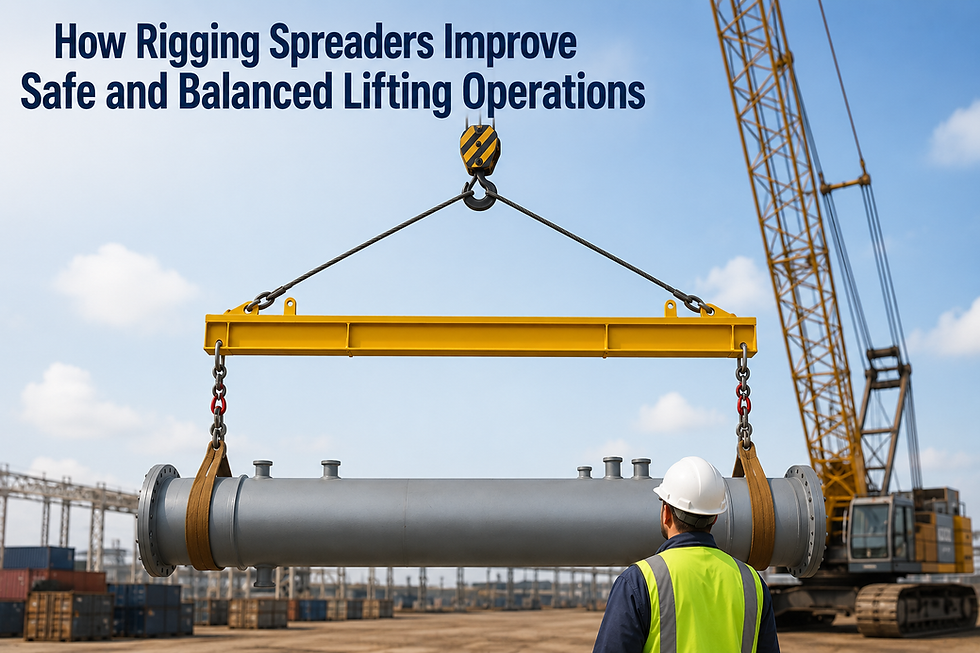
In modern material handling and heavy-duty lifting applications, maintaining load stability and workplace safety is critical. Industries such as construction, manufacturing, shipping, and warehousing rely on advanced lifting equipment to move oversized and heavy materials efficiently. One of the most essential tools used in these operations is the rigging spreader. Designed to distribute load weight evenly, rigging spreaders help prevent damage to equipment, improve lifting balance, and enhance operational safety.
Whether lifting steel beams, machinery, pipes, or containers, businesses increasingly depend on adjustable spreader systems and advanced lifting technologies like the high speed electric hoist to streamline operations and reduce downtime. Understanding how these components work together can help companies improve productivity while ensuring safe lifting practices.
What Is a Rigging Spreader?
A rigging spreader is a lifting attachment used with cranes and hoists to support and stabilize heavy loads during lifting operations. It works by distributing the weight of a load across multiple lifting points, reducing stress on the material and minimizing the risk of bending or damage.
Rigging spreaders are commonly used in applications where long or uneven loads need balanced support. They are available in various configurations, including fixed and adjustable designs, depending on the lifting requirements.
Industries often pair a rigging spreader with crane systems and a high speed electric hoist to achieve faster and more controlled lifting performance.
Importance of Balanced Lifting Operations
Balanced lifting is essential for maintaining workplace safety and protecting valuable materials. Uneven lifting can lead to swinging loads, structural damage, equipment failure, and serious workplace accidents.
A properly selected rigging spreader helps operators maintain load control by:
Evenly distributing load weight
Reducing side loading on lifting slings
Preventing load bending or deformation
Improving crane stability
Enhancing lifting precision
These benefits are especially important when handling large industrial equipment or delicate materials that require careful positioning.
Benefits of Using Adjustable Spreader Systems
An adjustable spreader offers greater flexibility compared to fixed spreader bars. Adjustable systems allow operators to modify the lifting span based on load size and shape, making them ideal for facilities handling different types of materials.
1. Increased Versatility
An adjustable spreader can accommodate various load dimensions without requiring multiple lifting devices. This flexibility helps businesses reduce equipment costs and improve operational efficiency.
2. Improved Safety
By adjusting the lifting points according to the load’s center of gravity, operators can achieve better balance and reduce the risk of load shifting during transport.
3. Reduced Equipment Stress
Proper load distribution minimizes stress on slings, hooks, and crane components, extending equipment lifespan and reducing maintenance costs.
4. Faster Setup Time
Modern adjustable spreader systems are designed for quick adjustments, helping operators save time and improve workflow productivity.
Role of High Speed Electric Hoists in Lifting Efficiency
A high speed electric hoist plays a major role in improving lifting performance in industrial operations. These hoists are engineered for rapid lifting and lowering while maintaining precise load control.
When combined with a rigging spreader, a high speed electric hoist helps create a safer and more efficient lifting system.
Key advantages include:
Faster lifting cycles
Improved productivity
Reduced manual labor
Precise load positioning
Enhanced operational safety
High speed electric hoists are widely used in manufacturing plants, warehouses, shipyards, and construction sites where continuous lifting operations are required.
Common Applications of Rigging Spreaders
Rigging spreaders are used across many industries for handling oversized or heavy materials safely.
Construction Industry
Construction companies use rigging spreaders to lift steel beams, concrete panels, and structural components while maintaining balance and stability.
Shipping and Logistics
Ports and logistics facilities rely on rigging spreader systems for container handling and cargo transportation.
Manufacturing Facilities
Manufacturers use adjustable spreader systems to move heavy machinery, equipment parts, and raw materials safely across production areas.
Oil and Gas Industry
The oil and gas sector uses rigging spreaders for lifting pipes, drilling equipment, and large industrial components in challenging environments.
Choosing the Right Rigging Spreader
Selecting the correct rigging spreader depends on several important factors:
Load capacity
Load dimensions
Lifting height
Number of lifting points
Environmental conditions
Compatibility with crane and hoist systems
Businesses should always work with experienced lifting equipment suppliers to ensure the rigging spreader meets safety regulations and operational requirements.
Safety Tips for Rigging Operations
Even with advanced lifting equipment, following proper safety procedures is essential.
Inspect Equipment Regularly
Always inspect slings, hooks, spreader bars, and hoists before operation to identify wear or damage.
Verify Load Capacity
Never exceed the rated capacity of the rigging spreader or high speed electric hoist.
Train Operators Properly
Only trained personnel should operate lifting equipment to reduce the risk of accidents.
Maintain Proper Load Balance
Ensure the load is centered and properly secured before lifting begins.
Conclusion
A rigging spreader is an essential tool for improving safe and balanced lifting operations across various industries. By evenly distributing load weight, reducing equipment stress, and enhancing load control, these systems help companies maintain safer and more efficient workplaces.
Modern adjustable spreader solutions provide flexibility for handling different load sizes, while advanced high speed electric hoist systems improve lifting speed and operational productivity. Together, these lifting technologies help businesses reduce downtime, protect valuable materials, and improve overall efficiency.
Investing in high-quality rigging spreader equipment is a smart decision for companies looking to enhance workplace safety and optimize heavy lifting performance.


Comments